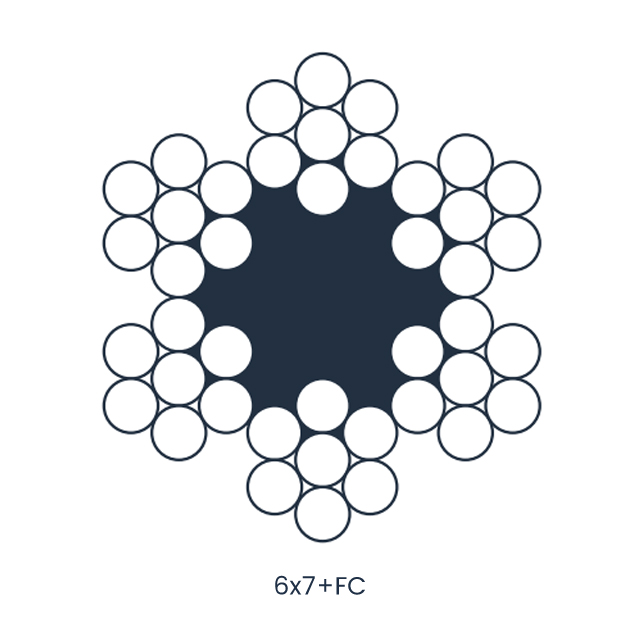
Wire ropes are essential components in various industrial applications, from construction to marine operations. Among the different types of wire ropes, the 7x7 and 7x19 configurations are particularly popular. This article delves into the strengths and weaknesses of these two wire rope types, providing a comprehensive analysis to determine which is stronger. For those interested in exploring more about wire ropes, our wire rope manufacturer page offers a wide range of options and detailed specifications.
Understanding Wire Rope Configurations
Wire ropes are constructed from multiple strands of wire twisted together to form a helix. The configuration of these strands, such as 7x7 or 7x19, indicates the number of strands and wires per strand. A 7x7 wire rope consists of seven strands, each containing seven wires, resulting in a total of 49 wires. Conversely, a 7x19 wire rope has seven strands with 19 wires per strand, totaling 133 wires. These configurations impact the rope's flexibility, strength, and application suitability.
Flexibility and Strength
Flexibility and strength are critical factors when selecting a wire rope. The 7x7 wire rope is less flexible than the 7x19 due to its fewer wires, making it ideal for applications requiring less bending. It is often used in rigging and lifting operations where rigidity is advantageous. In contrast, the 7x19 wire rope is more flexible, suitable for applications involving pulleys and winches where frequent bending occurs. Its flexibility, however, comes at the cost of slightly reduced strength compared to the 7x7 configuration.
Material Composition
The material used in wire rope construction significantly affects its performance. Steel wire rope is renowned for its high tensile strength and durability, making it a preferred choice in heavy-duty applications. Stainless steel wire rope offers excellent corrosion resistance, ideal for marine and outdoor environments. Both 7x7 and 7x19 configurations can be manufactured from these materials, with the choice depending on the specific application requirements.
Applications of 7x7 and 7x19 Wire Ropes
The choice between 7x7 and 7x19 wire ropes often depends on the intended application. The 7x7 wire rope is commonly used in applications where strength is paramount, such as in industrial wire rope settings and wire rope for cranes. Its rigidity makes it less prone to deformation under heavy loads. On the other hand, the 7x19 wire rope is favored in applications requiring high flexibility, such as wire rope cable systems and custom wire rope designs. Its ability to bend easily without compromising structural integrity makes it suitable for dynamic environments.
Industrial and Construction Use
In industrial settings, wire ropes are indispensable for lifting, hoisting, and securing loads. The 7x7 configuration is often chosen for wire rope for construction due to its strength and stability. It is particularly effective in static applications where minimal movement occurs. Conversely, the 7x19 wire rope is utilized in dynamic applications, such as elevators and cranes, where its flexibility allows for smooth operation over pulleys and sheaves.
Marine and Outdoor Applications
Marine environments pose unique challenges for wire ropes, including exposure to saltwater and harsh weather conditions. Stainless steel wire rope is preferred in these settings for its corrosion resistance. The 7x19 configuration is particularly advantageous in marine applications, such as sailboat rigging and mooring lines, where flexibility and resistance to environmental factors are crucial. The 7x7 wire rope can also be used in marine settings but is more suited to static applications where less bending occurs.
Comparative Analysis: 7x7 vs. 7x19 Wire Rope
To determine which wire rope configuration is stronger, it is essential to consider several factors, including tensile strength, flexibility, and application suitability. The 7x7 wire rope generally offers higher tensile strength due to its compact construction, making it ideal for heavy-duty applications. However, the 7x19 wire rope's increased flexibility allows it to perform better in dynamic environments where bending and movement are frequent.
Tensile Strength and Load Capacity
Tensile strength is a critical measure of a wire rope's ability to withstand pulling forces. The 7x7 wire rope, with its fewer wires, typically exhibits higher tensile strength, making it suitable for applications requiring maximum load capacity. It is often used in scenarios where the rope must support significant weight without stretching or breaking. In contrast, the 7x19 wire rope, while slightly less strong, offers sufficient tensile strength for most applications, particularly where flexibility is a priority.
Durability and Longevity
Durability is another crucial factor when comparing wire ropes. The 7x7 configuration, with its robust construction, tends to have a longer lifespan in static applications where wear and tear are minimal. It is less susceptible to fraying and damage from repeated bending. On the other hand, the 7x19 wire rope, while more flexible, may experience increased wear in high-stress environments due to its numerous wires. Regular maintenance and inspection are essential to ensure its longevity.
Conclusion
In conclusion, the choice between 7x7 and 7x19 wire ropes depends largely on the specific application requirements. The 7x7 wire rope offers superior tensile strength and durability, making it ideal for static, heavy-duty applications. Meanwhile, the 7x19 wire rope provides greater flexibility, suitable for dynamic environments where bending and movement are frequent. Both configurations have their strengths and weaknesses, and the decision should be based on the intended use and environmental conditions. For more information on selecting the right wire rope for your needs, visit our custom wire rope solutions page.
FAQs
1. What are the main differences between 7x7 and 7x19 wire ropes?
The main differences lie in flexibility and tensile strength. The 7x7 wire rope is less flexible but offers higher tensile strength, while the 7x19 is more flexible but slightly less strong.
2. Which wire rope is better for marine applications?
For marine applications, the 7x19 wire rope is generally preferred due to its flexibility and resistance to environmental factors, especially when made from stainless steel.
3. Can 7x7 wire rope be used in dynamic applications?
While possible, the 7x7 wire rope is better suited for static applications. Its rigidity makes it less ideal for dynamic environments where frequent bending occurs.
4. How does material choice affect wire rope performance?
Material choice, such as steel or stainless steel, affects the rope's strength, durability, and corrosion resistance, impacting its suitability for different environments.
5. What maintenance is required for wire ropes?
Regular inspection for wear, lubrication, and timely replacement of damaged sections are crucial for maintaining wire rope performance and safety.


