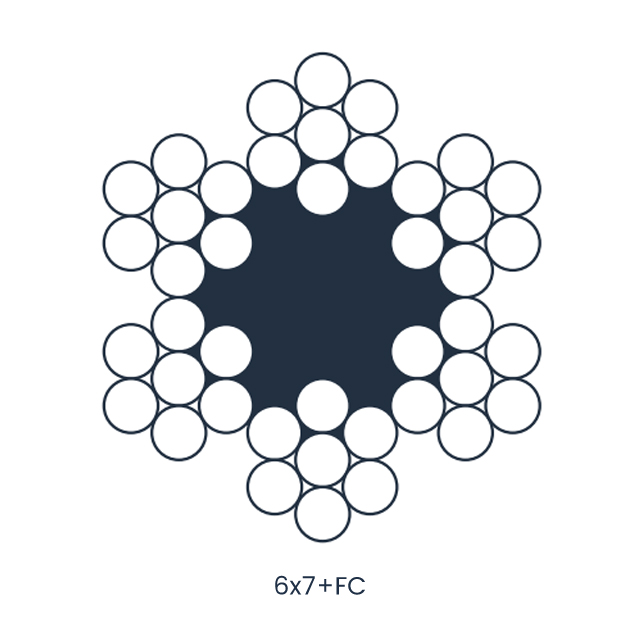
Tensile strength is not merely a number on a laboratory report; it is the critical threshold standing between operational success and catastrophic failure in lifting and rigging applications. For engineers and procurement managers, understanding this metric goes beyond basic load requirements. It involves recognizing the nuance between a rope’s theoretical potential and its actual performance in the field. When a heavy load is suspended in the air, the margin for error disappears, making the precise definition of strength paramount.
A common problem in the industry involves buyers confusing "Aggregate Breaking Strength" with "Minimum Breaking Force." Others fail to account for how terminations—such as clips or sockets—reduce the actual capacity of the system. These oversights can lead to under-specifying equipment, creating dangerous safety hazards. This article clarifies these critical definitions, compares material grades like IPS and EIPS, and analyzes how structural factors like fill factor and core type dictate the true performance of steel wire rope.
Key Takeaways
MBS vs. WLL: Tensile strength (Minimum Breaking Strength) is a failure point, not a working limit. Safe Working Load (SWL) requires a safety factor calculation (typically 5:1).
System Efficiency: A rope is only as strong as its termination. Aluminum sleeves may reduce capacity to 90%, while improper clips can drop it to <80%.
Grade vs. Structure: Increasing wire grade (e.g., to EEIPS) offers marginal gains (~10%), while changing structure (e.g., to compacted strand) can increase strength by ~30%+.
Core Matters: Steel cores (IWRC) offer significantly higher tensile strength than fiber cores (FC) of the same diameter.
Defining Tensile Strength vs. Minimum Breaking Force (MBS)
To select the correct rigging equipment, you must distinguish between the tensile strength of the raw material and the breaking load of the finished product. The raw material strength is measured in pressure units (N/mm² or PSI), referring to the stress the steel can handle. However, the finished rope is measured in force units (kN, lbs, or tons), representing the actual load it can lift.
The Three Critical Metrics
Understanding the hierarchy of strength metrics is essential for safe planning. You will encounter three distinct terms in technical documentation:
Yield Strength: This is the limit where the wire stretches permanently. If a load exceeds this point, the wire suffers plastic deformation. It will not return to its original shape, structural integrity is compromised, and the rope must be retired immediately.
Aggregate Strength: This is the theoretical sum of the breaking strengths of all individual wires in the rope. It assumes every wire breaks at the exact same millisecond, which is physically impossible in a twisted structure. Aggregate strength is often an inflated number and is dangerous to use for operational planning.
Minimum Breaking Strength (MBS): This is the guaranteed value at which the rope will snap under controlled test conditions. It accounts for the stranding loss (the reduction in strength due to twisting wires). Note: This is the primary spec for procurement and safety calculations.
Decision Insight
Engineering teams must base all load calculations on MBS rather than Aggregate Strength. Relying on aggregate figures can overestimate capacity by 10% to 20%, significantly eating into your safety factor. Always refer to validated steel wire rope specifications that list the Minimum Breaking Force to ensure compliance and safety.
The 4 Factors Influencing Wire Rope Tensile Strength
The strength of a rope is not random; it is the result of four specific engineering variables. By manipulating these factors, manufacturers can tailor ropes for high-static loads or dynamic flexibility.
1. Material Grade (The Chemical Path)
The foundation of strength lies in the chemistry of the steel. High-carbon steel undergoes a process called "cold drawing," where thick rods are pulled through smaller dies. This aligns the crystalline structure of the metal, drastically increasing its tensile capability.
When comparing materials, galvanized carbon steel generally offers higher breaking loads compared to stainless steel. While stainless steel provides excellent corrosion resistance, the alloying elements (like chromium and nickel) typically result in a lower breaking load for the same diameter. If your application demands maximum strength, galvanized carbon steel is usually the superior choice.
2. Rope Construction & Core
The internal architecture of the rope plays a massive role in its final capacity. The most significant variable here is the core type:
IWRC (Independent Wire Rope Core): This construction features a miniature steel rope in the center. It adds approximately 7.5% to 10% more strength compared to a Fiber Core (FC) because the core itself bears load.
Strand Count: Stiffer ropes, such as 1x19 configurations, have a higher metal density and less empty space, resulting in higher strength. Flexible ropes, like 7x19, sacrifice some metal density for flexibility, resulting in a slightly lower breaking load.
3. Fill Factor (The Density Path)
Fill factor measures the amount of metallic cross-sectional area within the rope's diameter. In standard ropes, round wires touch at single points, leaving voids (air gaps) between them.
Standard vs. Compacted: "Compacted" or "Swaged" ropes use strands that have been compressed. This flattens the outer wires, closing the gaps and increasing the metallic area.
ROI Impact: By switching to compacted ropes, you can achieve 30%+ higher breaking strength without increasing the rope diameter. This allows engineers to design lighter, more streamlined machinery with smaller sheaves and drums.
4. Manufacturing Quality
Quality manufacturing relies on precise cold drawing. This process does more than size the wire; it creates metallurgical redundancy. If the grain structure is perfectly aligned, the wire achieves high yield strength. Quality drawing ensures that the load is distributed evenly across all wires, preventing premature failure of individual strands.
Decoding Grades: IPS, EIPS, and Metric Equivalents
One of the most confusing aspects of purchasing wire rope is the mismatch between Imperial terminology (Plow Steel) and Metric specifications (Newtons). Spec sheets often mix these terms, leading to procurement errors.
Standard Conversion Reference
To simplify selection, the industry uses standard equivalencies. The table below outlines the three most common grades you will encounter.
| Imperial Grade | Metric Equivalent (Approx.) | Application Context |
| IPS (Improved Plow Steel) | 1770 N/mm² | The historical baseline. Good for general utility, but becoming less common for heavy lifting. |
| EIPS (Extra Improved Plow Steel) | 1960 N/mm² | The modern standard. Approximately 15% stronger than IPS. Default for most cranes and hoists. |
| EEIPS (Extra Extra Improved Plow Steel) | 2160 N/mm² | High-performance grade. Used when breaking load must be maximized without increasing diameter. |
Procurement Strategy
For most industrial applications, specifying EIPS (1960 N/mm²) represents the most cost-effective strategy. It balances high availability with sufficient tensile strength. While EEIPS is stronger, it is often more expensive and harder to source for quick replacements. Only specify EEIPS if the engineering constraints strictly prohibit a larger diameter rope.
The Hidden Trap: Terminations & System Efficiency
A critical oversight in system design is assuming the assembly is as strong as the rope. The tensile strength values listed in catalogs refer to the rope itself. However, the moment you add a termination—an eye, a hook, or a clip—you alter the system's physics. The assembly strength is determined by the "efficiency" of that termination method.
Efficiency Ratings (The "Reality Check")
Different termination methods retain different percentages of the rope's original MBS. You must factor this loss into your calculations.
Swaged Sockets (Cold Weld): When performed correctly by a hydraulic press, this forms a cold weld. It is the only termination that can achieve 100% of the wire rope's breaking strength.
Wedge Sockets: These are popular for their reusability in the field. They typically offer 75–90% efficiency depending on the specific product design.
Wire Rope Clips (Crosby Clips): These are highly variable. If installed perfectly (correct torque, spacing, and saddle placement), they can reach 80% efficiency. However, improper installation is common and can drop efficiency significantly.
Hand-Spliced Eyes: Efficiency varies heavily by rope diameter and the splicer's skill, generally resulting in lower retained strength compared to mechanical swaging.
Coating Risks
If you are using PVC or Vinyl coated rope, there is a strict rule: strip the coating before terminating. Clamping a clip or swage directly over the plastic coating creates a "lubricated" layer. Under load, the steel core will slip through the coating, destroying holding power and negating any tensile ratings. Always terminate directly to the steel.
Calculating Safe Working Loads (SWL) for Real-World Use
Moving from the laboratory to the field requires converting "Breaking Strength" into a "Working Load Limit" (WLL). The breaking strength is the point of destruction; the WLL is the maximum load you can legally and safely apply.
The Safety Factor (SF) Formula
To determine the WLL, you apply a Safety Factor (SF) to the wire rope tensile strength (MBS). The formula is simple:
MBS ÷ Safety Factor = WLL
Industry Standard Factors
The safety factor acts as a buffer against shock loads, wear, and unforeseen stresses. Standards vary by industry:
General Rigging/Lifting: A 5:1 ratio is standard. If you are lifting 1 ton, your rope needs an MBS of at least 5 tons.
Personnel/Life Safety: A 10:1 ratio is required. If the rope supports people (e.g., elevators or rescue hoists), the rope must be ten times stronger than the load.
TCO & ROI Consideration
While higher-grade ropes (like EEIPS or compacted strands) cost more per foot, they often lower the Total Cost of Ownership (TCO). A higher tensile grade allows you to use a smaller diameter rope to lift the same load. A thinner rope means you can use a smaller drum, smaller sheaves, and a lighter motor gearbox. These systemic savings often far outweigh the incremental cost of the premium rope.
Conclusion
Tensile strength is a complex function of material grade, core type, and fill factor—but in the real world, it is ultimately governed by termination quality and safety factors. A rope is only as strong as its weakest link, which is often the clip or socket holding it in place.
As a final verification step, buyers should always request mill certificates. These documents verify the Minimum Breaking Force (MBF) of the specific batch you are buying, rather than relying on generic catalog "nominal" values. This ensures your safety calculations are based on reality.
If you are designing a new lifting system or replacing old rigging, do not guess. Contact engineering support to perform a load-limit calculation or to spec the correct EIPS/EEIPS rope for your specific environmental conditions.
FAQ
Q: What is the difference between IPS and EIPS wire rope?
A: The difference lies in the tensile strength of the steel wire used. IPS (Improved Plow Steel) generally corresponds to a tensile strength of ~1770 N/mm², while EIPS (Extra Improved Plow Steel) corresponds to ~1960 N/mm². Practically, EIPS is about 15% stronger than IPS of the same diameter. EIPS is the modern standard for most industrial lifting applications, while IPS is now considered a lower-tier baseline.
Q: Does stainless steel wire rope have lower tensile strength than galvanized?
A: Yes, typically. Stainless steel alloys (like 304 or 316) are optimized for corrosion resistance rather than pure mechanical strength. Consequently, a stainless steel rope usually has a lower breaking strength than a galvanized carbon steel rope of the exact same diameter and construction. Engineers must account for this reduction when designing marine or chemical applications.
Q: How do I calculate the Safe Working Load from tensile strength?
A: To find the Safe Working Load (SWL), divide the Minimum Breaking Strength (MBS) by the Safety Factor appropriate for your application. For general overhead lifting and rigging, the standard safety factor is 5. Therefore, the calculation is MBS divided by 5. For personnel lifting, divide by 10.
Q: Is 7x19 or 7x7 wire rope stronger?
A: Generally, 7x7 wire rope is slightly stronger than 7x19 of the same diameter. The 7x7 construction uses fewer, larger wires, which results in a higher metallic fill density and less space between wires. However, 7x19 is significantly more flexible. You trade a small amount of tensile strength for the ability to bend around smaller sheaves.
Q: What is the unit of measure for wire rope tensile strength?
A: Wire rope tensile strength is expressed in units of force. In the United States, it is typically measured in Pounds (lbs) or Short Tons. Internationally and in ISO standards, it is measured in Kilonewtons (kN) or Metric Tonnes. When reading a spec sheet, always confirm which "Ton" is being used (2,000 lbs vs. 2,204 lbs).


