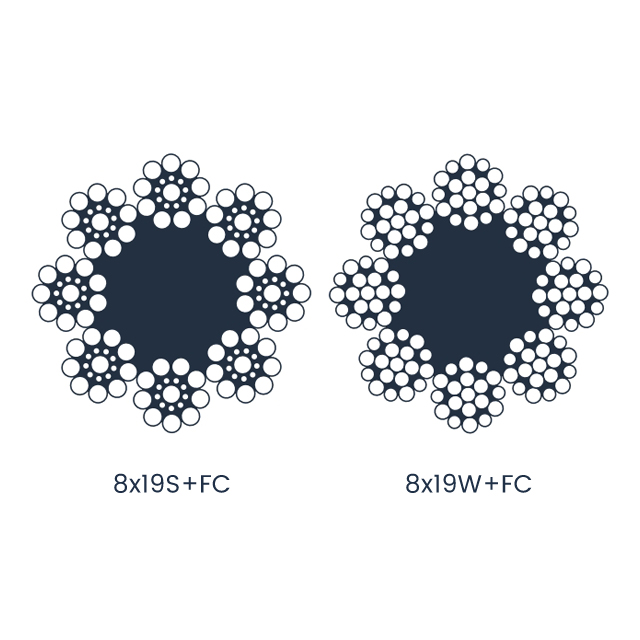
Wire ropes are critical components in various industrial applications, including elevators, cranes, and construction machinery. Understanding the load-bearing capacity of wire ropes is essential for ensuring safety and efficiency. This article delves into the specifics of how much weight a 3/16 wire rope can hold, exploring factors that influence its strength and performance. For those interested in wire rope specifications and applications, this analysis provides a comprehensive overview.
Understanding Wire Rope Specifications
Wire ropes are complex structures made from multiple strands of wire twisted together. The specifications of a wire rope, including its diameter, construction, and material, significantly impact its load-bearing capacity. A 3/16 wire rope, for instance, refers to the diameter of the rope, which is a critical factor in determining its strength. The construction of the wire rope, such as the number of strands and wires per strand, also plays a vital role. Common constructions include 6x19, 6x37, and 8x19, each offering different levels of flexibility and strength.
The material of the wire rope, typically steel, can vary in terms of tensile strength and corrosion resistance. For elevator applications, specific types of steel wire ropes are used, such as elevator steel wire rope, which are designed to meet stringent safety standards.
Factors Affecting Load Capacity
Several factors influence the load capacity of a 3/16 wire rope. The most significant factors include the rope's construction, material, and the conditions under which it is used. For example, a wire rope with a higher number of wires per strand, such as the 8x19S CSC Elevator Steel Wire Rope, offers greater flexibility and can distribute the load more evenly, enhancing its load capacity.
Environmental conditions, such as temperature, humidity, and exposure to chemicals, can also affect the wire rope's performance. Corrosion is a significant concern, especially in marine or industrial environments, where the wire rope may be exposed to saltwater or corrosive chemicals. In such cases, selecting a wire rope with enhanced corrosion resistance is crucial.
Calculating Load Capacity
The load capacity of a wire rope is typically calculated using its breaking strength, which is the maximum load the rope can withstand before failure. The breaking strength is determined by the rope's diameter, construction, and material. For a 3/16 wire rope, the breaking strength can vary depending on these factors, but it generally ranges from 2,000 to 3,500 pounds.
To ensure safety, the working load limit (WLL) is used, which is a fraction of the breaking strength. The WLL is calculated by dividing the breaking strength by a safety factor, typically ranging from 5 to 10, depending on the application. For instance, if a 3/16 wire rope has a breaking strength of 3,000 pounds and a safety factor of 5, its WLL would be 600 pounds.
Applications of 3/16 Wire Rope
The 3/16 wire rope is used in various applications due to its balance of strength and flexibility. In the elevator industry, it is used in systems where space constraints and weight are critical considerations. Elevator wire rope manufacturers often provide customized solutions to meet specific requirements, such as the Custom elevator wire rope.
In industrial settings, 3/16 wire ropes are used in cranes, hoists, and winches. Their ability to handle moderate loads while offering flexibility makes them ideal for applications where precise control is necessary. Additionally, their smaller diameter allows for use in compact spaces, making them suitable for a wide range of machinery and equipment.
Safety Considerations
Safety is paramount when using wire ropes. Regular inspection and maintenance are essential to ensure the wire rope remains in good condition. Signs of wear, such as broken wires, corrosion, or kinks, should be addressed immediately to prevent accidents. In elevator applications, the use of specialized ropes, such as the Industrial elevator wire rope, is crucial for maintaining safety standards.
Proper installation and usage are also critical. Wire ropes should be installed according to manufacturer guidelines, and users should be trained in safe handling practices. Overloading the wire rope beyond its WLL can lead to catastrophic failure, so adherence to load limits is essential.
Conclusion
In conclusion, the load capacity of a 3/16 wire rope is influenced by various factors, including its construction, material, and environmental conditions. Understanding these factors is crucial for selecting the appropriate wire rope for specific applications. Whether used in elevators, industrial machinery, or other settings, ensuring the wire rope is properly maintained and used within its load limits is essential for safety and performance.
FAQs
1. What is the typical breaking strength of a 3/16 wire rope?
The breaking strength of a 3/16 wire rope typically ranges from 2,000 to 3,500 pounds, depending on its construction and material.
2. How is the working load limit (WLL) calculated for a wire rope?
The WLL is calculated by dividing the breaking strength by a safety factor, which is usually between 5 and 10.
3. What are some common applications for 3/16 wire rope?
Common applications include elevators, cranes, hoists, and winches, where moderate load capacity and flexibility are required.
4. Why is regular inspection of wire ropes important?
Regular inspection helps identify signs of wear, such as broken wires or corrosion, which can prevent accidents and ensure safety.
5. What factors affect the load capacity of a wire rope?
Factors include the rope's diameter, construction, material, and environmental conditions like temperature and exposure to chemicals.
6. How does the construction of a wire rope influence its performance?
The construction, such as the number of strands and wires per strand, affects the rope's flexibility, strength, and load distribution.
7. What safety measures should be taken when using wire ropes?
Ensure proper installation, adhere to load limits, and conduct regular inspections to maintain safety and performance.


