


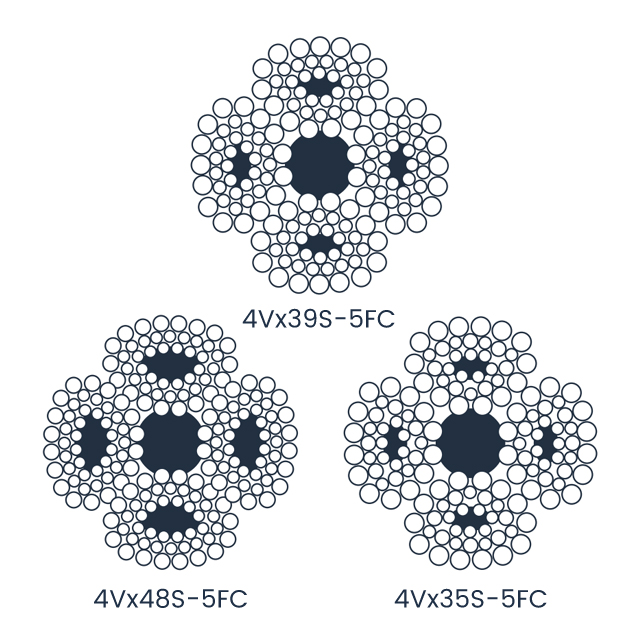

The 4-Strand Shaped Strand Wire Rope stands out in industrial lifting applications through its unique construction featuring four pre-formed strands, each composed of multiple high-tensile steel wires.
| Quantity: | |
|---|---|


| Nominal Diameter | Approx Weight(kg/100m) | Nominal Tensile Strength(MPa) | ||||
| 1570 | 1670 | 1770 | 1870 | |||
| NFC | SFC | Minimum Breaking Strength(kn) | ||||
| 10 | 41.0 | 40.2 | 56.5 | 60.1 | 63.7 | 67.3 |
| 12 | 59.0 | 57.9 | 81.4 | 86.6 | 91.7 | 96.9 |
| 14 | 80.4 | 78.8 | 111 | 118 | 125 | 132 |
| 16 | 105 | 103 | 145 | 154 | 163 | 172 |
| 18 | 133 | 130 | 183 | 195 | 206 | 218 |
| 20 | 164 | 161 | 226 | 240 | 255 | 269 |
| 22 | 198 | 195 | 274 | 291 | 308 | 326 |
| 24 | 236 | 323 | 326 | 346 | 367 | 388 |
| 26 | 277 | 272 | 382 | 406 | 431 | 455 |
| 28 | 321 | 315 | 443 | 471 | 500 | 528 |
| 30 | 369 | 362 | 509 | 541 | 573 | 606 |
| 32 | 420 | 412 | 579 | 616 | 652 | 689 |
| 34 | 474 | 465 | 653 | 695 | 737 | 778 |
| 36 | 531 | 521 | 732 | 779 | 826 | 872 |
| 38 | 592 | 580 | 816 | 868 | 920 | 972 |
| 40 | 656 | 643 | 904 | 962 | 1020 | 1080 |
| 42 | 723 | 709 | 997 | 1060 | 1120 | 1190 |
| 44 | 794 | 778 | 1090 | 1160 | 1230 | 1300 |
| 46 | 868 | 850 | 1191 | 1268 | 1344 | - |
| 48 | 945 | 926 | 1297 | 1380 | 1464 | - |
Strand Construction:
FC-9-15-15
FC-9-15-15
FC-12-18-18
FC-7-7+7-14
This design combines the benefits of shaped strand technology with the operational advantages of a 4-strand configuration, delivering exceptional wear resistance, flexibility, and non-rotational performance. Unlike traditional 6-strand ropes, its reduced strand count minimizes inter-strand friction, while the shaped strands create a tighter, more stable structure that maintains dimensional integrity under heavy loads. This rope is particularly valued in environments where both strength and maneuverability are critical.
The shaped strand design ensures that contact stress between individual wires is evenly distributed, significantly reducing wear during operation. With fewer strands than conventional ropes, there is less inter-strand friction, extending the rope's service life by up to 30% compared to 6-strand alternatives in similar applications.
Through precision forging processes, the 4-strand configuration achieves a high metal filling ratio, enhancing overall structural stability. This tight construction resists deformation under crushing forces, making it suitable for use with narrow-drum hoists and winches. The rope maintains consistent performance even after repeated bending cycles over sheaves.
The balanced twist direction of the four strands creates inherent rotational stability, preventing dangerous load spinning during lifting operations. This feature is particularly valuable when hoisting irregularly shaped loads or operating in confined spaces where load control is critical.
Manufactured from high-tensile non-alloy steel conforming to DIN EN 10264-2 standards, this rope achieves tensile strengths ranging from 1570 MPa to 2160 MPa. Depending on diameter, minimum breaking loads can exceed 15,300 kN for large-diameter versions, providing ample safety margins for heavy lifting applications.
The versatility of 4-Strand Shaped Strand Wire Rope makes it suitable for diverse industrial sectors:
• Construction hoisting for lifting steel beams and precast concrete components
• Port and shipyard operations including container lifting and vessel mooring
• Mining applications such as shaft sinking and ore bucket hoisting
• Petrochemical industry for offshore platform crane operations
• Heavy machinery moving requiring precise load control and stability
Shaped strand ropes feature wires with profiled cross-sections that fit together like puzzle pieces, reducing internal friction and increasing contact area between wires. This design enhances load distribution and wear resistance compared to round-wire strands.
Yes, when specified with galvanized coating or stainless steel construction (1.4401 grade), the rope exhibits excellent corrosion resistance for marine and offshore applications. Stainless steel versions offer a modulus of elasticity of 130 kN/mm² ± 10 kN/mm².
To ensure optimal performance and prevent premature wear, the minimum sheave diameter should be 20-25 times the rope diameter, depending on the specific application and load conditions.
Lubrication should be performed every 3-6 months under normal operating conditions. In harsh environments with dust, moisture, or chemical exposure, more frequent lubrication with specialized wire rope grease is recommended.
While field splicing is possible with proper training and equipment, factory-spliced ends are recommended for maximum strength retention. Field splices typically reduce the rope's breaking strength by 15-20%.
| Nominal Diameter | Approx Weight(kg/100m) | Nominal Tensile Strength(MPa) | ||||
| 1570 | 1670 | 1770 | 1870 | |||
| NFC | SFC | Minimum Breaking Strength(kn) | ||||
| 10 | 41.0 | 40.2 | 56.5 | 60.1 | 63.7 | 67.3 |
| 12 | 59.0 | 57.9 | 81.4 | 86.6 | 91.7 | 96.9 |
| 14 | 80.4 | 78.8 | 111 | 118 | 125 | 132 |
| 16 | 105 | 103 | 145 | 154 | 163 | 172 |
| 18 | 133 | 130 | 183 | 195 | 206 | 218 |
| 20 | 164 | 161 | 226 | 240 | 255 | 269 |
| 22 | 198 | 195 | 274 | 291 | 308 | 326 |
| 24 | 236 | 323 | 326 | 346 | 367 | 388 |
| 26 | 277 | 272 | 382 | 406 | 431 | 455 |
| 28 | 321 | 315 | 443 | 471 | 500 | 528 |
| 30 | 369 | 362 | 509 | 541 | 573 | 606 |
| 32 | 420 | 412 | 579 | 616 | 652 | 689 |
| 34 | 474 | 465 | 653 | 695 | 737 | 778 |
| 36 | 531 | 521 | 732 | 779 | 826 | 872 |
| 38 | 592 | 580 | 816 | 868 | 920 | 972 |
| 40 | 656 | 643 | 904 | 962 | 1020 | 1080 |
| 42 | 723 | 709 | 997 | 1060 | 1120 | 1190 |
| 44 | 794 | 778 | 1090 | 1160 | 1230 | 1300 |
| 46 | 868 | 850 | 1191 | 1268 | 1344 | - |
| 48 | 945 | 926 | 1297 | 1380 | 1464 | - |
Strand Construction:
FC-9-15-15
FC-9-15-15
FC-12-18-18
FC-7-7+7-14
This design combines the benefits of shaped strand technology with the operational advantages of a 4-strand configuration, delivering exceptional wear resistance, flexibility, and non-rotational performance. Unlike traditional 6-strand ropes, its reduced strand count minimizes inter-strand friction, while the shaped strands create a tighter, more stable structure that maintains dimensional integrity under heavy loads. This rope is particularly valued in environments where both strength and maneuverability are critical.
The shaped strand design ensures that contact stress between individual wires is evenly distributed, significantly reducing wear during operation. With fewer strands than conventional ropes, there is less inter-strand friction, extending the rope's service life by up to 30% compared to 6-strand alternatives in similar applications.
Through precision forging processes, the 4-strand configuration achieves a high metal filling ratio, enhancing overall structural stability. This tight construction resists deformation under crushing forces, making it suitable for use with narrow-drum hoists and winches. The rope maintains consistent performance even after repeated bending cycles over sheaves.
The balanced twist direction of the four strands creates inherent rotational stability, preventing dangerous load spinning during lifting operations. This feature is particularly valuable when hoisting irregularly shaped loads or operating in confined spaces where load control is critical.
Manufactured from high-tensile non-alloy steel conforming to DIN EN 10264-2 standards, this rope achieves tensile strengths ranging from 1570 MPa to 2160 MPa. Depending on diameter, minimum breaking loads can exceed 15,300 kN for large-diameter versions, providing ample safety margins for heavy lifting applications.
The versatility of 4-Strand Shaped Strand Wire Rope makes it suitable for diverse industrial sectors:
• Construction hoisting for lifting steel beams and precast concrete components
• Port and shipyard operations including container lifting and vessel mooring
• Mining applications such as shaft sinking and ore bucket hoisting
• Petrochemical industry for offshore platform crane operations
• Heavy machinery moving requiring precise load control and stability
Shaped strand ropes feature wires with profiled cross-sections that fit together like puzzle pieces, reducing internal friction and increasing contact area between wires. This design enhances load distribution and wear resistance compared to round-wire strands.
Yes, when specified with galvanized coating or stainless steel construction (1.4401 grade), the rope exhibits excellent corrosion resistance for marine and offshore applications. Stainless steel versions offer a modulus of elasticity of 130 kN/mm² ± 10 kN/mm².
To ensure optimal performance and prevent premature wear, the minimum sheave diameter should be 20-25 times the rope diameter, depending on the specific application and load conditions.
Lubrication should be performed every 3-6 months under normal operating conditions. In harsh environments with dust, moisture, or chemical exposure, more frequent lubrication with specialized wire rope grease is recommended.
While field splicing is possible with proper training and equipment, factory-spliced ends are recommended for maximum strength retention. Field splices typically reduce the rope's breaking strength by 15-20%.
